A rental apartment is a machine that runs all year. Where the budget goes, what the salt destroys first, and how to furnish once instead of twice.
Two owners can furnish the same apartment for the same money and end up with very different businesses. One replaces the sofa in year two and the mattresses in year three. The other is still renting the same set in year six, with a paint touch-up and a new set of cushions.
The difference is not taste. It is understanding what a coastal rental does to a building and its contents, and buying for that instead of buying for a photograph.
The short answer
Furnish for turnover, not for your own taste. Spend on the things a guest touches and the things the salt attacks: mattresses, seating, taps and fittings, air conditioning, and anything metal. Save on decoration that has to be replaced anyway. Then budget for a replacement reserve from the first month, because the coast will take its share every year.
Three budgets, not one
Most buyers plan a single furnishing number. There are three.
- The fit-out. What the apartment needs to be complete and legal to let: window treatments, lighting, kitchen equipment, air conditioning checks, and any safety items.
- The furnishing. Beds, seating, tables, storage, textiles, kitchenware and the outdoor set.
- The replacement reserve. An annual amount set aside for the items the coast will ruin. It is not optional. It is the cost of running the unit.
A plan that funds the first two and ignores the third is a plan to furnish twice.
What the coast attacks first
Salt, sun, humidity and sand work on different materials at different speeds.
- Metal. Hinges, handles, rails, frames and cheap fittings pit and seize. Stainless steel helps, but only the right grade, and even then it needs cleaning.
- Timber. Solid wood moves with humidity. Veneer lifts at the edges. MDF swells and does not recover.
- Fabric. Sun fades it, salt stiffens it, and humidity gives it a smell that guests notice before they notice the view.
- Foam and mattresses. Humidity is the quiet killer. A cheap mattress in a closed apartment for a summer is a mattress with a problem.
- Outdoor furniture. Resin, aluminium and solution-dyed fabric survive. Anything with steel bolts and a painted finish does not.
- Electronics. Salt air corrodes contacts. Air conditioning and kitchen appliances need servicing on a schedule, not on failure.
Buy for the climate first and the style second. The style can be in the colour, the textiles and the lighting.
Where to spend
- Mattresses and bedding. Guests judge the sleep first. This is the one place where a better product pays for itself.
- Seating. A sofa that holds its shape through a season of guests.
- Taps, showers and fittings. Cheap chrome fails visibly, and a dripping shower is the first review complaint.
- Air conditioning. Confirm the units are correctly sized for the rooms, and keep the service records.
- Window treatments. Sun control protects everything else in the room.
- Kitchen equipment. A working oven, a full set of pans, enough plates and glasses for the advertised occupancy.
- Lighting. Good light makes a modest apartment feel considered, and it is cheap to replace.
Where to save
- Statement furniture that only works with one layout.
- Pale upholstery in the living room, and anything dry clean only.
- Decorative items a guest will move, break or take.
- Rugs that hold sand and cannot be washed.
- Open shelving full of small objects.
- Artwork that needs special handling between guests.
The rental specification
Guests do not inspect the specification. They notice whether the apartment works.
- Enough beds and bedding for the advertised number of guests, including the sofa bed.
- Blackout in every bedroom, and enough shade on the terrace to sit there at midday.
- A kitchen that can cook a meal, not just boil water.
- Reliable wifi, stated honestly in the listing.
- Air conditioning in every room that needs it, not only the living room.
- Adequate hot water for the occupancy, tested at peak use.
- Storage for luggage, so the apartment does not look lived in between guests.
- Cleaning equipment that the housekeeping team can actually use.
- A safe place for keys, and a lock that can be re-keyed between long stays.
Turnover is the real cost
Every guest arrival is a small project: cleaning, laundry, restocking, checking and repairing. The furnishing choices decide how long that project takes.
- Fewer surfaces and less clutter mean faster cleaning.
- Washable covers and removable throws mean faster laundry.
- Standard bulb fittings and standard sizes mean faster replacement.
- A labelled inventory means fewer missing items and faster checks.
- A spare set of everything that breaks most often saves a cancelled night.
Time is the cost that does not appear in the furnishing invoice, and it is paid every week.
Furnishing packages
Developers and suppliers increasingly offer a package that furnishes the unit to a standard. They can save time. They can also hide the decisions that matter.
- Ask for the actual item list, with brands or equivalents.
- Check the mattress, the sofa and the taps specifically. These are where packages economise.
- Confirm what is excluded: curtains, kitchenware, outdoor furniture, decoration, installation.
- Ask who owns the items and what happens if something fails in the first year.
- Compare the package price against sourcing the same list yourself, including delivery and assembly.
- Confirm lead times against your first planned let.
A package is only good value if the list is good. Read the list.
Sourcing and lead times
The coast has fewer suppliers than the capital, and the good ones book up.
- Order large items before handover where the contract allows.
- Confirm delivery access, lift availability and any building rules on deliveries.
- Check what can be delivered to the address and what has to be collected.
- Allow time for assembly and installation, not only delivery.
- Keep invoices and guarantees for everything that has one.
Insurance and security
A rental unit is a business asset. Treat it like one.
- Confirm the contents are covered, and whether short lets change the terms.
- Check what the building insurance covers and what it does not.
- Keep a photographic inventory before the first guest.
- Confirm the lock and key policy, and how keys are reissued after a long stay.
- Agree who holds the deposit and how damage is assessed.
Red flags
- A furnishing quote with no item list.
- Mattresses and sofas priced far below the rest of the package.
- Outdoor furniture with painted steel frames.
- Fabric described only as “premium” with no composition.
- No answer on lead times.
- No plan for replacing items, and no reserve.
- A listing that advertises more guests than the bedding and hot water can support.
The mistakes owners make
- Furnishing for their own taste instead of for guests and turnover.
- Buying the cheapest mattress and replacing it twice.
- Ignoring the effect of humidity on closed apartments.
- Treating the replacement reserve as optional.
- Choosing materials that cannot be cleaned by a housekeeping team.
- Skipping the inventory, then arguing about damage with no evidence.
- Forgetting the outdoor space, which is often the reason the guest booked.
A rental is not furnished once. It is furnished, maintained and replaced on a schedule.
Where our releases sit
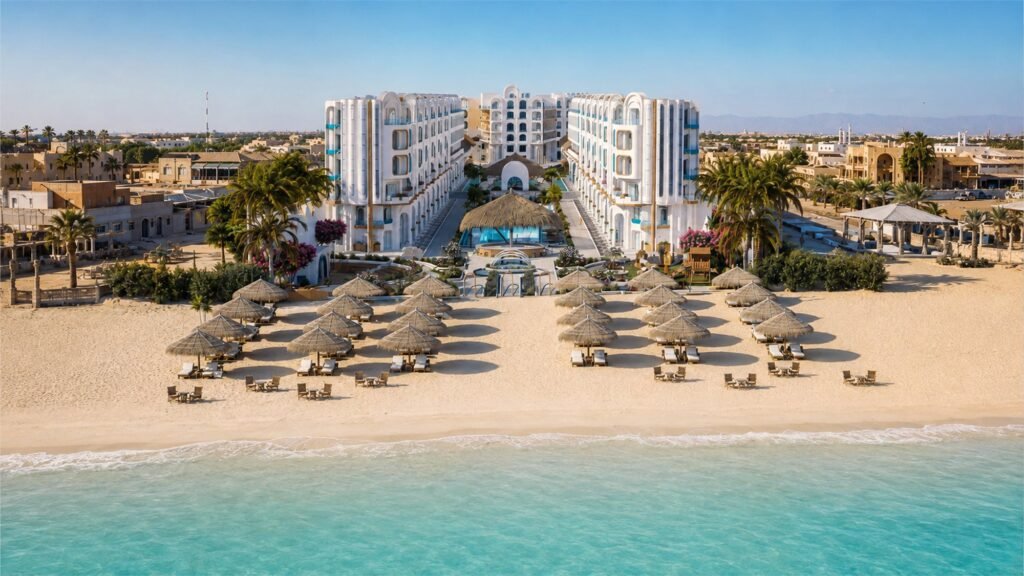
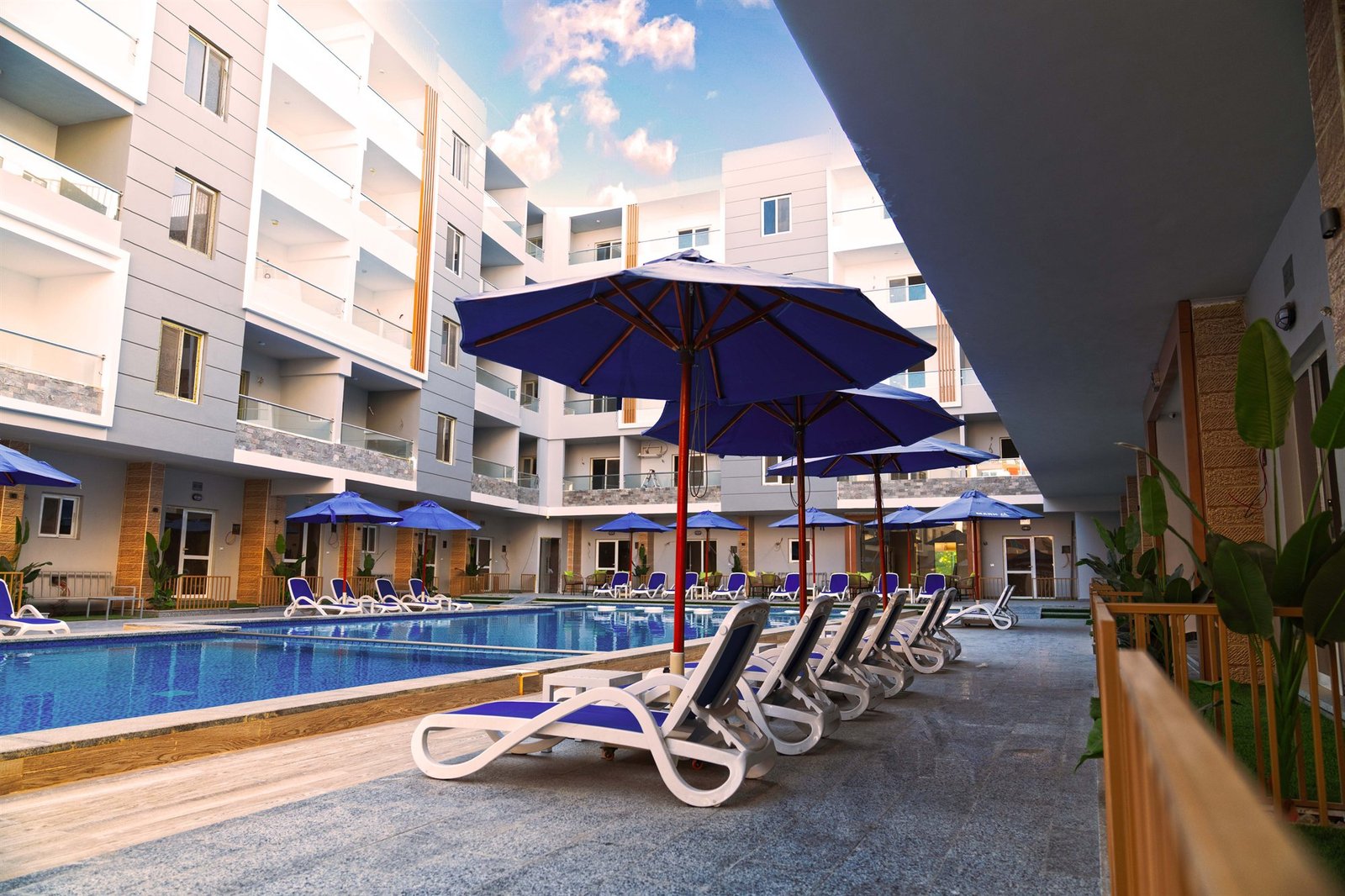
Al Arabia builds in Al Kawther in the south and Al Ahyaa in the north. For Mark Resort and Athena Resort, the team can share the unit dimensions and layouts before you furnish, and explain what the building allows for deliveries and short lets. Talk to the team or compare the current releases.
For what the unit actually earns after costs, read What a Red Sea Rental Really Earns. For the annual charge that runs alongside it, read The Second Price.
See it in our projects: Athena Resort and Mark Resort are both selling now in Hurghada, with compact units suited to holiday letting. For current units, prices and payment plans, message our team on WhatsApp.
Ready to talk it through?
Our team can walk you through the details for any of our communities.