The service charge is a second price, paid every year. What it usually covers, what it should never hide, and how to compare two compounds before you reserve.
Two apartments can carry the same price and cost very different amounts to own. The difference is not in the brochure. It is in the service charge, the annual payment that keeps the shared parts of a compound running long after the keys are handed over.
Most buyers spend weeks on the purchase price and a few minutes on the number they will pay every year. That is the wrong way round. The purchase price is paid once. The service charge is paid for as long as you own the unit.
The short answer
A service charge is the annual cost of operating and maintaining everything outside your front door. A fair charge is itemised, budgeted, auditable and shared by a published formula. A charge you cannot inspect is not a fee. It is a promise.
Ask for the budget before you ask for the discount. The budget tells you what kind of building you are buying into.
What the money usually pays for
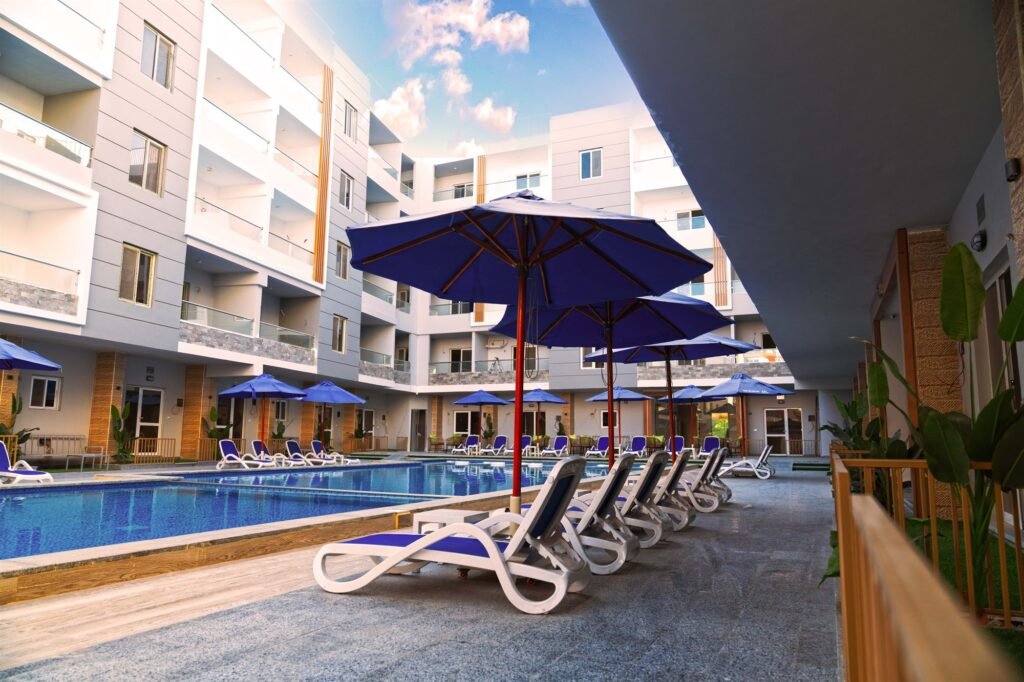
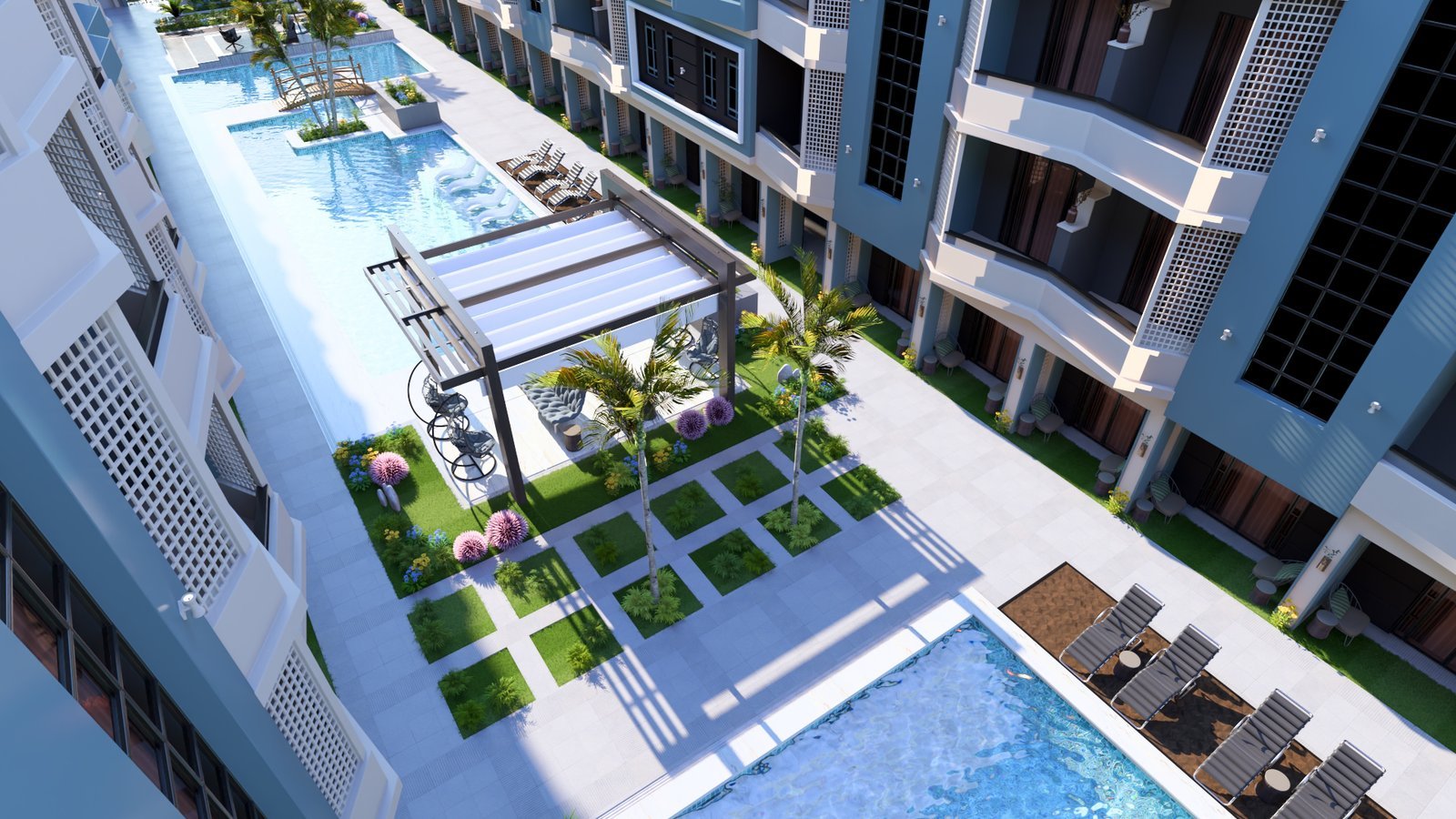
In a Red Sea compound or resort, the list is longer than many buyers expect.
- Security and staffing. Gatehouse, patrols, reception, cleaners, gardeners, pool attendants and the management team.
- Landscaping and irrigation. Water, planting, pruning, pest control and the replacement of plants that fail in the heat.
- Pools and water features. Filtration, chemicals, pumps, tiles, cleaning and the water itself.
- Common electricity. Street lighting, garden lighting, lifts, pumps, gates, cameras and the clubhouse.
- Cleaning and waste. Common areas, roads, bins, collection and pest control.
- Building maintenance. Paint, roofs, facades, paving, railings, drainage and the slow repair of salt and sun.
- Insurance. Cover for the common areas, which should be named in the budget.
- Management fee. The company that collects, schedules and supervises the work.
- Reserve fund. A ring-fenced amount for large repairs, if the project has one.
Amenity-heavy schemes cost more to run. That is not a flaw. It is a trade: you pay for the pool, the gym and the garden whether you use them or not.
What it should not cover
- Inside your unit. Repairs, appliances, air conditioning and decoration are yours.
- Private gardens, terraces and plunge pools. Usually billed separately or maintained by the owner.
- Consumption. Electricity and water for your unit should be metered and billed to you, not pooled into the charge.
- Upgrades. New amenities or a higher standard of service should be agreed by the owners, not introduced quietly through the annual budget.
- Developer marketing. Sales offices, show units and launch events are not a cost of living in the compound.
If any of these appear in the budget, ask why.
How the share is calculated
There is no single method. What matters is that the method is written down and applied consistently.
- By unit area. Your share is the unit’s area as a percentage of the total built area. Larger units pay more.
- By unit count. Every apartment pays the same, regardless of size. Simpler, but unfair to smaller units.
- By coefficient. A schedule assigns each unit a share based on size, position and use. Common in professionally managed buildings.
- By phase. In a phased project, owners in completed phases may subsidise amenities that later phases will use. Ask how the phase is ring-fenced.
Ask to see the calculation for the specific unit, not an average.
The escalation clause is part of the price
A charge set at launch is not the charge you will pay in five years.
- Fixed increase. A stated annual percentage. Predictable, but it may drift from real costs.
- Index-linked. Tied to inflation or a published index. Ask which index and which base year.
- Board-approved. Set each year by the owners’ association or the developer. Flexible, but it needs a budget and a vote.
Read the clause, not the current figure. A low launch charge with an open escalation clause can become a high charge with no warning.
Before and after handover
The entity that controls the charge changes, and the contract should say when.
- During construction. The developer sets and collects the charge. Ask whether it is collected from handover or from reservation.
- At handover. The owners’ association should take over the budget, the contracts and the bank account.
- After handover. The association approves the budget, appoints the manager and audits the accounts.
Ask for the transition plan, the draft association rules and the date the developer intends to hand over control. A developer who never plans to hand over control is a red flag.
What a healthy service charge looks like
- A line-item budget, not a single number.
- A published share for your unit.
- A named management company and a stated fee.
- A reserve fund with a rule for how it is used.
- Audited accounts, or a commitment to audit.
- A collection rate and an arrears policy.
- A clear escalation rule.
- A transition date for the owners’ association.
Red flags
- “The service charge will be announced later.”
- A launch figure far below comparable compounds, with no explanation.
- No budget, no line items and no share calculation.
- No reserve fund and no plan for major repairs.
- The developer controls the account indefinitely.
- Utilities pooled into the charge instead of metered.
- A charge quoted in one currency and collected in another, with no rate rule.
- Penalties for late payment that are not written down.
The ten-year view
Service charges are small in any single year and large over a decade. If one compound charges 20 percent more than another, and you hold for ten years, you pay the equivalent of two extra years of charges. That is real money, and it does not appear in the price per square metre.
It also affects the exit. A buyer comparing two units will ask what the annual charge is. A high charge with no visible service is harder to sell.
The rental math
If you plan to let the unit, the service charge is a fixed cost that runs whether the calendar is full or empty. It comes off the rent before you calculate yield.
Our guide to what a Red Sea rental really earns sets out the other running costs. Add the service charge to that list before you compare a compound unit with a standalone apartment.
Questions to ask before you reserve
- Can I see the annual budget, line by line?
- What is the share for this unit, and how is it calculated?
- Is the charge collected from reservation or from handover?
- What is included, and what is billed separately?
- How much is in the reserve fund, and who controls it?
- What is the escalation rule for the next five years?
- Who manages the compound today, and what is the fee?
- When does the owners’ association take over?
- Are the accounts audited, and can I see the last set?
- What happens if an owner does not pay?
- Are utilities metered per unit?
- What is the collection rate today?
The mistakes buyers make
- Comparing purchase prices without comparing annual charges.
- Accepting a launch figure as a permanent cost.
- Not asking what the charge excludes.
- Ignoring the escalation clause.
- Assuming the developer will hand over control.
- Forgetting the charge in the rental yield.
- Paying a deposit before seeing the budget.
A service charge is not an extra. It is the annual price of the building you chose.
Where our releases sit
Al Arabia builds in Al Kawther in the south and Al Ahyaa in the north. For Mark Resort and Athena Resort, we provide the service charge budget, the share calculation for the unit and the list of what is included before you reserve. We also set out how the charge is collected and when the owners’ association is intended to take over. Talk to the team or compare the current releases.
For the cost of buying off plan rather than ready, read Off-Plan or Ready. For how the area is measured, read Gross or Net.
See it in our projects: Hurghada Heights and Lavanda Beach Resort are both selling now in Hurghada. For current units, prices and payment plans, message our team on WhatsApp.
Ready to talk it through?
Our team can walk you through the details for any of our communities.